Sunday, December 5, 2010

Session 14

Immigration


Who and why:
The percentage of immigrants (legal and illegal) whom are coming to the United States is constantly growing. This issue is being addressed on a daily basis here. Many immigrants come here to find work and make a better life for themselves as well as their families. I have always heard the phrase "immigrants will do the work Americans do not want to do." In my opinion, I believe that is somewhat true. Because immigrants have such a drive to work and make money, they do the jobs that are lower on the chain just to provide. Therefore, since some immigrants are hardly paid for their work or if they are illegal immigrants, this would be another reason as to who would be poor and why. It shocked me to see that at one point in time, Georgia had the highest growth rate for illegal immigration. You would never think that states toward the east coast would have such a significant growth in their immigrant population. I would think it would be those states close to the border at least.


What's being done and should be:
Since the attack on 9/11, the United States has become more strict with the immigration issue. A large number of illegal immigrants are being deported every year. There have been more agents put on the Border Control along with miles and miles of more fencing. The president also hopes to fix the immigration system which he believes is broken by implementing his new immigration policy. I agree that immigration is a major issue and we need to find ways to fix it. I have no problem with having immigrants in America. However, there is a right way of doing things. Americans have to have passports and proper documentations just to enter other countries, so immigrants should have to fill out the proper documentation and do what they are suppose to to come to America. This is just a thought, but I think that if homeless people (who are actually American citizens) were given the chance to do a job, they would do the jobs that some Americans are more willing to give to the immigrants. 

Saturday, November 20, 2010

Session 13

Housing and Community Development

I am very pleased to see that there are so many different housing and community development policies out there. Before now, I really did not know much about the housing policies or what exactly they were all about. What I do know is that environment does contribute to people being in poverty. Those living in low income populations are surrounded by other individuals with some of the same problems as them. Therefore, communities need to be integrated. In a previous post, I mentioned a theory about achieving a society with low concentrations of poverty and there actually is a program out there just for that. The HOPE IV Program actually tries to break up poor communities (such as traditional Section 8 housing) and create mixed ones which will benefit poor families and have a positive impact. Another program that interested me was the HOME program because it helps low income families with affordable housing. I am so glad to hear that there are grants out there and people out there want to help those in poverty succeed. People in poverty still deserve decent homes and should be able to afford one that they will be able to one day call their own. As we know there are millions of people in America who are living in poverty; therefore, we have so much work to do in order to help all these individuals. 


Perhaps the government actually does care and wants to rebuild poor neighborhoods. President Obama has made it his duty to try to help urban communities. He wants to provide more money for the Community Development Block Grant as well as other grants. From what I learned about this act, it seems like it could really benefit low income families and metropolitan areas as a whole. He wants to educate them, provide them training that will give them skills for a good job and also help them save on their energy bills. 


I really did learn new information from this session. I can see that there is a lot being done in the housing aspect. However, this alone is still not going to help bring people out of poverty. These programs have been around for many, many years and yet poverty has still been increasing. Moving them to better housing is just a start and more steps need to be taken.

Sunday, November 14, 2010

Session 12

Social Security


Why?
Social Security has been a big dilemma in the United States lately. I believe that there is an issue about it running out because of the recession. The United States is in so much debt that the government will have to acquire trillions of dollars for the Social Security Trust Fund in order to pay all the benefits. 

It says that the payroll tax would have to rise more than 18% under the current system in order for everyone to get their benefits. I think that people deserve their Social Security. It is a benefit that every hardworking individual deserves. However, with the payroll tax increasing, that just means more and more low income families will continue to stay in poverty. More and more money will be taken out of their paychecks which will make it even more difficult for them to provide for their families. Therefore, this does not help resolve the poverty issue at all.

What's being done?
There have been discussions about higher income families paying more for Social Security which in itself will be an issue for those individuals because I'm sure many of them feel as though that is their money and they should not have to pay more. Also, another solution that would be of controversy would be to cut benefits. Personally, I know that if have been working hard for at least 10 years, then I would feel as though I deserved all my benefits. Moreover, those in poverty will be hurt by this solution the most which does not solve anything....Recently, The Recovery Act was passed in February 2009 and this act is offered to the disabled, senior citizens, etc. The President really wants to help the Social Security issue and give everyone what they deserve especially the elderly. 


Hopefully, these solutions will help to boost the economy and help with creating new jobs for individuals. In result, this well hopefully help to solve the poverty crisis.   

Sunday, November 7, 2010

Session 11

Health Care Controversies

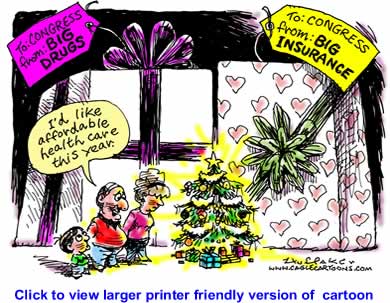
Healthcare has always been an issue in the United States. I was shocked to see that from 2008 to 2009, 7.5 million children were uninsured. Many of those children were those in poverty. Not to judge anyone, it was not hard to believe that Hispanic children had a higher uninsured rate than the other races. I guess this may have something to do with many Hispanics who are new to the country or just cannot afford it. It is sad to see that the poor populations have to go without health insurance. In my opinion, that really doesn’t make sense. How are they expected to be able to afford insurance if they can barely put food in their tables? This is just another benefit that those in poverty are not capable of having. With that being said, if those in low income populations do have to go to the hospital, they acquire another expense. Doctor and hospital bills are not cheap. Health care costs and prescription drugs cost are steadily increasing. As a result, those in poverty are just going to get more and more in debt.

What’s being done?
There are a few programs out there that I know from my knowledge that already benefit some poor families. I use to have an aunt who received Medicaid for her and her family and I know that it really helped her out a lot. Just for the simple fact of knowing that with her low income, her children would still be able to receive the proper doctor assistance if they needed it. Also, the State Children’s Health Insurance Program helps uninsured children if their families over qualify for Medicaid. Just recently in March, President Obama signed a Health Care Bill that could help those in poor populations. The bill would lower health care costs and hold insurance companies accountable. In my opinion, I believe that this could really be beneficial and could really help many Americans who do not have the means to afford health care. Families will have coverage and can rest easy just by knowing that their children will be taken care of medically. However, many Republicans and others are against this bill and there is an ongoing debate as to whether or not it should be dismissed. 


Sunday, October 24, 2010

Session 9

Policy Responses

I think the "American Dream" video was a great look at the poverty cycle. Many people today are poor because they have been poor their whole life. Angie use to be on welfare and then she found a job that pays $11/hour. I was shocked to hear that even with her job, she still lives in poverty and has to have the help of her eldest son. It was sad to see that both of Angie's older children had dropped out of high school. Lakeisha got pregnant young and now lives in poverty with her two children. It is true that the longer you are in poverty, the harder it is to get out of it. I also agree with the approach of having more fathers in the picture. We tend to forget that the men are in poverty as well. I firmly believe that more help needs to be given to the men, especially when it comes to black males. Black males make up a good percentage of those incarcerated. Many of them have to result to selling drugs in order for them to survive. As you could see in Ken's case, living with drug-addicted parents and not having food to eat made him turn to the streets in order to get by. I believe that once they get caught up in the idea of being able to make "quick money", it makes it so much harder for them to want to stop. Therefore, with the males getting in trouble so much and having to go to jail, this creates a void in their children's lives. This is why so many children in poverty are growing up without fathers and the mothers are left to provide for their families all on their own. 

There are some programs and aid out there to help those in poverty. There are public assistance and social insurance porgrams. Public assistance is based on income whereas social insurance is universal. Therefore, social insurance has a great influence on poor families. Food Stamp is also offered to families of three who make $16,608 or less a year. I have recently learned that there is a federal-state program by the name of TANF and EITC. TANF is a temporary assistance for needy families and this program administers money to those families who are defined as needy. I have never even heard of this, but I think this is a great program. It is sad to hear that TANF is one of the least used social welfare programs and that half of those eligible do not even receive it. I think it's great to know that most welfare leavers find jobs; however, some of these jobs still leave them in poverty. Even with all this assistance, poverty is still increasing and more needs to be done.

Sunday, October 10, 2010

Session 7

Poverty and Wages
John Trever - The Albuquerque Journal - Living Wage - English - Living wage, minimum wage, city council, pay, wage, wages, salary, burger, fast food, worker, workers, quit, quitting, fired, firing, boss, money, teen, teens
     I had no idea that 63% of all hourly wage jobs in Atlanta pay less than $10.50/hour or that six of the ten fastest growing jobs pay less than $10/hour. Even if an individual worked full-time, they would STILL bring home less than $1,800 a month and that does not factor in federal or state taxes. This budget is barely enough money for a single adult to survive or meet their basic monthly needs. Moreover, a family of three most definitely cannot survive on this income which results in the family being considered poor because the adult cannot support her family financially. Therefore,  the family will need government assistance and cannot be self-sufficient. 
      Also, tip workers have it a lot worse because they only make about $2.13/hour and that has not changed since 1991. There really isn't much you can buy for $2.13. Even if you do not make the minimum wage in an hour, the workers are not compensated. I find that ridiculous and quite sad because sometimes being a tip worker may be the only job an individual may be qualified for. 62% of tip workers are woman and this contributes to the higher rates of poverty among single-female headed households.

The "In Search of Living Wage: Faith in Georgia" video explains the minimum wage issue very well and in depth. It was disheartening to watch the video and see how some individuals have to struggle day to day. Although the increase in minimum wage has helped thousands of workers, the government STILL needs to do more. 


Wednesday, September 29, 2010

Session 6

Who:
Recent reports have shown that one in seven Americans still live in poverty. That statistic should make a bold enough statement on its own. Just by knowing that there are millions of people in America, there are thousands maybe even millions of people to this day living in poverty. Also, those who do not even have a high school degree are more likely to be poor than those with a high school degree or a Bachelors' degree. Women are also more likely to be in poverty than men. From reading the articles, many individuals who live in Mississippi and now Georgia are poor. Poverty extends beyond just the homeless but to those who have been the working middle class.


Why:
The continuing rise in unemployment is a big factor of the cause of poverty. When people lose their jobs, they have no other income to support themselves or their family. Losing your source of income can alter your life completely. With the way the economy has been, it makes it that much harder for individuals to find new work. Not to mention, going from a good job to a low paying job. Low paying jobs do not pay enough to keep families out of poverty. The longer your in poverty, the harder it is to get out!


How well addressed:
Obviously, if the poverty in Georgia has increased and one in seven Americans are poor, then the issue must not be addressed too well. More effort needs to be put into letting the world know about these horrible statistics. Americans need to be more educated about poverty. We are more likely too see those affected by a natural disaster on television than those here in on backyard who are starving for food and need a place to sleep.


What's should be done:
I agree with the idea of equal opportunity and income. Every one deserves the same opportunity or chance to try to succeed in life. When one person has an advantage over the other, then most likely the top dog will always come out on top. This just makes the underdog (in this case the poor individual) have to try that much harder to get out of poverty. Anything that will help minimize the number of individuals who are poor is a goo idea to me. 


Saturday, September 25, 2010

Session 5

Update to who
I have learned in this weeks session that the U.S. suffers from more poverty and inequality than most other developed countries. Also, I have always knew that Africa had the highest rate of extreme poverty. I now know that in 2001, South Asia with 31% and East Asia with 15% have rates of extreme poor as well.  In the U.S. and globally, the number of women and children who are poor is very large.  


Why:
*there is a misconception that countries are poor because of corruption and misrule*...with that being said, I still believe people and countries are poor because of lack of education, low income, environment, etc. Some poor people and families frequently move into and out of poverty.   


Update to what's being done and how well addressed:


  • Author Jeffery Sachs came up with 9 Steps to end extreme poverty and the Big Five Interventios for extremely impoverished countries. I'm not too sure if his ideas are being implemented and if they are working.

  • The UN Millennium Project set forth a plan to resolve poverty, hunger and disease using the Millennium Development Goals. From reading the article: http://www.unmillenniumproject.org/goals/index.htm, the plan helped to increase overall income by 21% between 1990 and 2002. Also, the number of people in extreme poverty declined. I think that if the plan has somewhat worked before, but clearly the issue is still not being addressed well. 
  • The Time Magazine article discusses how the United States has been saying they are going to help other countries by giving them a larger share of their output. However, they have failed to do so which brings me back to my initial point of view. The U.S. is not doing much to help the situation.


Update to what I personally think should be done:
I personally do not think the UN Millennium Goals will have the poverty issue resolved by 2015. This may be why they changed the deadline to 2025.  A lot more steps need to be taken if they are to meet this new deadline. Perhaps, they can come up with new ideas as to what more they can do. From reading more about globalization, there are some individuals who believe that globalization is growth-promoting. It can reduce poverty worldwide and global inequality. Yes there are those who oppose this idea; however, there is no reason for countries not to try and see what happens. 


Saturday, September 18, 2010

Session 4

Update again to why people may be poor:


According to John Iceland, "Where one lives affects the opportunities one has and the type of living one earns" (51). The book also talks about how spatially isolated rural areas are and how there is inadequate physical infrastructure. 


The "Do Neighborhoods Matter" video reinstates that theory. George Galster speaks about how the neighbors, the public school system, and the children who the child may play with also plays a very important role in an individuals life. I agree with the video and believe that environment can have a major impact. I have always heard about the South always being the poorest region in the U.S. and that metropolitan areas are poor ares as well. Therefore, some people in a sense may be doomed from the start just by where they grew up.


Update to what I think is being done:


Well, I still think that not much is being done by the government and that they are unwilling to make certain changes. However, from watching the video, I think there are some changes in the works. Galster's theory about trying to achieve a society with concentrations of poverty below 10% seems to be a good idea. There are all these stereotypical thoughts that go along with the idea of poor people moving into an area. If this theory does help ease some of the tension and helps neighbors feel safe, then that makes a lot of sense to me. Also, having requirements on new developments and standards for housing is a smart choice as well. Clearly, as I have been saying, more needs to be done.

Thursday, September 16, 2010

Session 3

Update to who I think is poor and why:


According to John Iceland, author of Poverty in America, "a common misconception is that majority of the poor are African American residents in inner cities" (3). Only about one-quarter of the poor population are in fact blacks. To my surprise, I have recently learned that 1 in every 3 poor people in 2005 were children. This statistic came somewhat as a shock to me. I guess I mainly thought that there would be more poor adults than children. As I previously said in my earlier post, there are still poor Hispanics and white. Globally, I believe there are poor people in almost every country. Therefore, anyone or any race can be considered poor.


John Iceland also reinforces some of the factors that I also believe may cause poverty:
  • low income
  • low education
  • family instability
So far, I still believe that poverty is still a major problem that is steadily increasing. America as well as the rest of the world, needs to find solutions for this issue and more ways to help out these poor individuals and families.


If you have time, check out the "Down and out in America" video:
http://webdb.gsu.edu/dmg/mediaplayer/mediaplayer.cfm?file=swo/swomlo/Ohmer/down_out.mov
.........................you can learn a lot and see poverty from a first-hand perspective!!
Side-note: Sometimes we forget that farmers are also being affected by poverty. Many of them are being forced out of their homes by the government because they do not have the means to pay for their expenses. 

Friday, September 3, 2010

Just a Thought...

Who you think is poor, both in the United States and globally?
Poverty is not limited to race or nationality. It is based upon a person's standard of living.  Majority of the poor people I see around the Atlanta area are usually African Americans. However, there are Whites as well as Hispanic people who are poor too. Globally, any individual who is lives below the poverty line is considered poor. We see commercials everyday on the television of children and women from other continents, such as Africa, who are poor. They cannot even feed themselves or their family


Why you believe people are poor in the United States and globally?
I believe people are poor because they could possibly have a drug addiction. Individuals who abuse drugs can let that spiral out of control and consume their lives. Also, people can become poor because of low education or perhaps they lost their job and can't support themselves anymore. Thinking globally, in many countries, children sometimes loose their parents and then end up living on the streets 


What you think is being done about poverty?
There are certain programs implemented to help out poor families. Welfare and food stamps are available to those families who qualify for it. This helps them manage getting by month to month. Also, there are homeless shelter, soup kitchens and other facilities that take time out to help the poor by feeding them and giving them a place to sleep at night.


How well you think poverty is being addressed currently in the Unites States and globally?
Even though there are organizations and facilities out there, I still believe the government is still not addressing the situations well. There is still much more that needs to be done because there are still MILLIONS of people in the world to this day that are in poverty.


What you personally think should be done about poverty in United States and globally?
I do not know exactly what should be done about the poverty issue. However, there needs to be some sort of    other policies enforced that will benefit them. I think that people should give back more and donate to charities and other organizations that are trying to assist the poor.